
What Are Simanim? Symbolic Foods for Rosh Hashanah
2026 May 20th
Simanim are symbolic foods eaten on Rosh Hashanah to express hopes and blessings for the new year. The word “simanim” means “signs” or “symbols,” and each food is connected to a meaningful wish, often based on its name, appearance, or traditional association.
Through simanim, the Rosh Hashanah meal becomes more than a festive gathering. It becomes a table of intention, where food, language, memory, and prayer come together at the beginning of the Jewish year.
What Does Simanim Mean?
The Hebrew word “simanim” refers to signs or symbolic markers. On Rosh Hashanah, these foods serve as physical reminders of the blessings people hope to receive in the year ahead.
Some simanim are connected to sweetness, abundance, protection, or spiritual renewal. Others are based on wordplay in Hebrew, Aramaic, Yiddish, or other Jewish languages, depending on community tradition.
Why Symbolic Foods Are Eaten on Rosh Hashanah
Rosh Hashanah is a time of reflection and prayer, but it is also a time of hope. Symbolic foods help bring that hope into the home in a visible and memorable way.
Rather than keeping the themes of the holiday only in the synagogue, simanim bring those ideas to the table. Each food becomes an opportunity to pause, say a short wish, and enter the new year with intention.
Common Rosh Hashanah Simanim
Customs vary between Jewish communities, but several symbolic foods are widely recognized. Common simanim include:
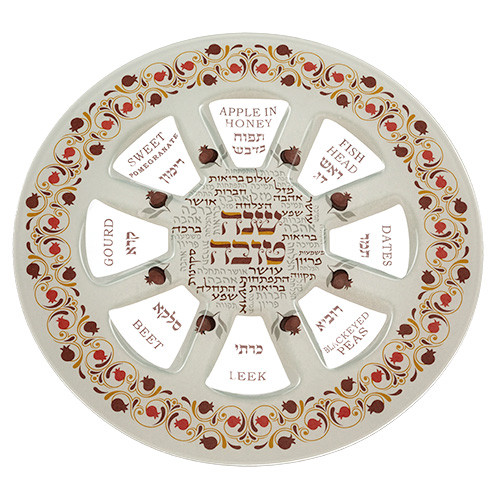
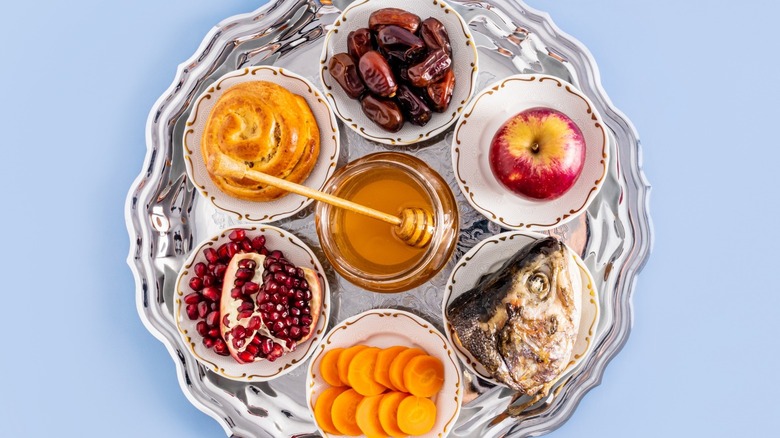
- Apples and honey: Symbolize the hope for a sweet new year.
- Pomegranate: Often associated with abundance and many merits.
- Dates: Connected in some traditions with the hope that negativity or enemies will come to an end.
- Carrots: In some Ashkenazi customs, associated with increase and blessing.
- Leeks, beets, or gourds: Used in various Sephardic and Mizrahi traditions with symbolic wishes based on their names.
- Fish or fish head: Connected with the hope to be fruitful or to be “at the head” and not “at the tail.”
Not every family uses every siman. The exact foods and wording often reflect family background, community custom, and personal tradition.
Apples and Honey as the Best-Known Siman
Apples dipped in honey are the most familiar Rosh Hashanah food custom for many Jewish families. The sweetness of the honey expresses the wish for a good and sweet year.
For a deeper explanation of this custom, see Why Do We Eat Apples and Honey on Rosh Hashanah?.
The Simanim Seder
Some families follow a structured order for eating simanim, sometimes called a Rosh Hashanah seder. During this practice, each symbolic food is introduced with a short blessing or wish connected to its meaning.
This custom is especially common in Sephardic and Mizrahi communities, though many families from different backgrounds include some form of symbolic foods at the holiday meal.
How Simanim Shape the Holiday Meal
Simanim help make the themes of Rosh Hashanah concrete. They turn abstract hopes — sweetness, blessing, growth, protection, and renewal — into foods that can be seen, tasted, and shared.
This makes the Rosh Hashanah meal especially meaningful for families, including children, because each food opens a simple conversation about the kind of year people hope to build.
Summary
Simanim are symbolic foods eaten on Rosh Hashanah to express hopes and blessings for the new year. Foods such as apples and honey, pomegranates, dates, carrots, and other traditional items help bring the themes of renewal, sweetness, and blessing into the holiday meal.